
A home that worked well for two adults can feel surprisingly cramped once a baby’s clothes, changing supplies and everyday equipment arrive.
Yet a lack of space doesn’t always mean you need to move. Before browsing property listings or planning an expensive extension, look at how each room currently functions and which possessions are taking up valuable floor area.
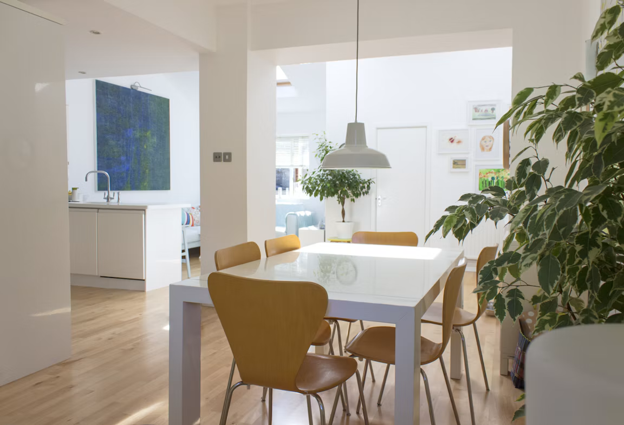
The aim is to create a home that supports family life without making every room feel like a storage cupboard. A careful layout review, some firm decisions about clutter and a few adaptable furniture choices can free up more usable space than you might expect.
Assessing Your Current Home Layout
Start with a simple floor plan, either drawn on paper or created with a free room-planning app. Add doors, windows, radiators and larger pieces of furniture. Once everything is visible on one page, awkward areas become easier to spot. A wide hallway may have room for closed shoe storage, while an underused dining corner could hold a compact desk.
Next, track how your family uses the home for one ordinary week. A room’s official label may have little connection to daily life. The spare bedroom might operate as an occasional laundry room, for example, while the dining table doubles as an office and homework area. Advice on family-friendly floor plans often highlights flexible shared areas and practical storage because family needs change quickly.
Look for repeated pressure points. Piles beside the front door suggest that coats and bags need a permanent home. Toys spreading across the sitting room may point to a lack of accessible, child-height storage. The common signs of an outgrown home also include lost privacy and rooms that can no longer perform their intended jobs.
Measure before moving or buying anything. Allow clear walking routes of around 30 inches where possible and check that cupboard doors can open fully. A room may contain enough square footage on paper but still feel tight because bulky furniture interrupts its natural flow.
Clearing Out the Future Nursery
A future nursery often begins as the room where unwanted possessions quietly gather. Emptying it can look like a huge job, especially when the space contains boxes from several house moves. Split the work into short sessions and tackle one category at a time, such as clothes, paperwork or old electronics.
Create four destinations for each item: keep at home, donate, recycle or store elsewhere. Give the “keep” category a firm test. You should know where the item will live and when you expect to use it. Sentimental possessions deserve proper protection, but they don’t all need to remain within daily reach.
Temporary off-site space can help when you’re keeping baby equipment for another child, holding furniture during redecoration or protecting family keepsakes. Families in the local area can compare sizes and flexible terms for storage units, then choose enough room for clearly labeled boxes without committing to a long rental period. Keep an inventory on your phone so you don’t buy duplicates or forget what has been packed away.
Once the room is empty, only bring back what supports its new purpose. Start with the essentials: a safe sleep space, changing supplies, soft lighting and somewhere for clothes. Leave some open floor area because the room’s role will develop quickly. A calm nursery for a newborn may need to become an active play space within a year, followed by a toddler bedroom soon afterward.
Multi-Functional Furniture Choices
Furniture earns its place in a small family home when it solves more than one problem. An ottoman can provide seating, toy storage and a place to put your feet. A changing surface fitted securely above a chest of drawers avoids the need for a separate changing table that may become redundant within a couple of years.
Choose items based on measurements and real routines. A large sofa bed sounds useful, but it won’t help if opening it blocks the bedroom door. Nesting tables may work better than one oversized coffee table because they can be separated during playtime and tucked away before dinner. Community discussions about a growing-family floor plan can offer useful ideas, though every suggestion still needs to fit your room dimensions.
Vertical space is often overlooked. Tall bookcases, wall-mounted shelves and over-door organizers move everyday possessions off the floor. Secure tall or heavy furniture to the wall according to the manufacturer’s directions, particularly once a child becomes mobile. Keep frequently used items within easy reach and reserve high shelves for seasonal clothes, spare bedding or adult belongings.
Plan for the furniture’s next job too. A sturdy dresser can move from the nursery into an older child’s room, while modular cube storage can shift from toys to school supplies. Neutral pieces are usually easier to reuse across different rooms, though washable surfaces matter more than matching colors during the early years.
Avoid filling every empty wall as soon as you find it. A little unused space gives you room for a play mat, a laundry basket or equipment that only appears during certain developmental stages.
Maintaining Breathing Room Everyday
A successful layout can unravel when ordinary family clutter starts returning. Give high-traffic belongings a fixed landing place near the point of use. Hooks beside the entrance work for coats and backpacks, while a shallow basket near the stairs can collect items that need to go up later.
Keep storage simple enough for tired adults and young children to use. Open bins with picture labels are often more practical for toys than boxes with tight lids. Limit each category to the container assigned to it. When the toy-car basket or dressing-up box is full, involve your child in choosing what to pass on before adding anything new.
A ten-minute reset at the end of the day can protect the layout without turning housekeeping into a major evening task. Return toys to their bins, clear the main walkway and prepare the entrance for the next morning. Older children can handle one predictable task, such as putting books back or carrying clothes to the laundry basket.
Longer-term housing plans still deserve consideration. If your household repeatedly lacks privacy or safe play space after reorganizing, moving may be a sensible future option. A home that simply contains too many possessions, however, may benefit more from a thorough clear-out.
Review the setup every three months during the baby’s first year. Remove outgrown clothes, relocate equipment that’s no longer used and adjust storage as your child becomes more mobile. These short reviews stop temporary piles from becoming permanent features.
Leave one part of the nursery deliberately empty when the room is ready. That patch of open floor will soon hold a play mat, a favorite toy and plenty of ordinary family moments. It’s also a useful reminder that usable space has value of its own.